Luana Perilli
Cantalamissa
Curator: Simona Caramia
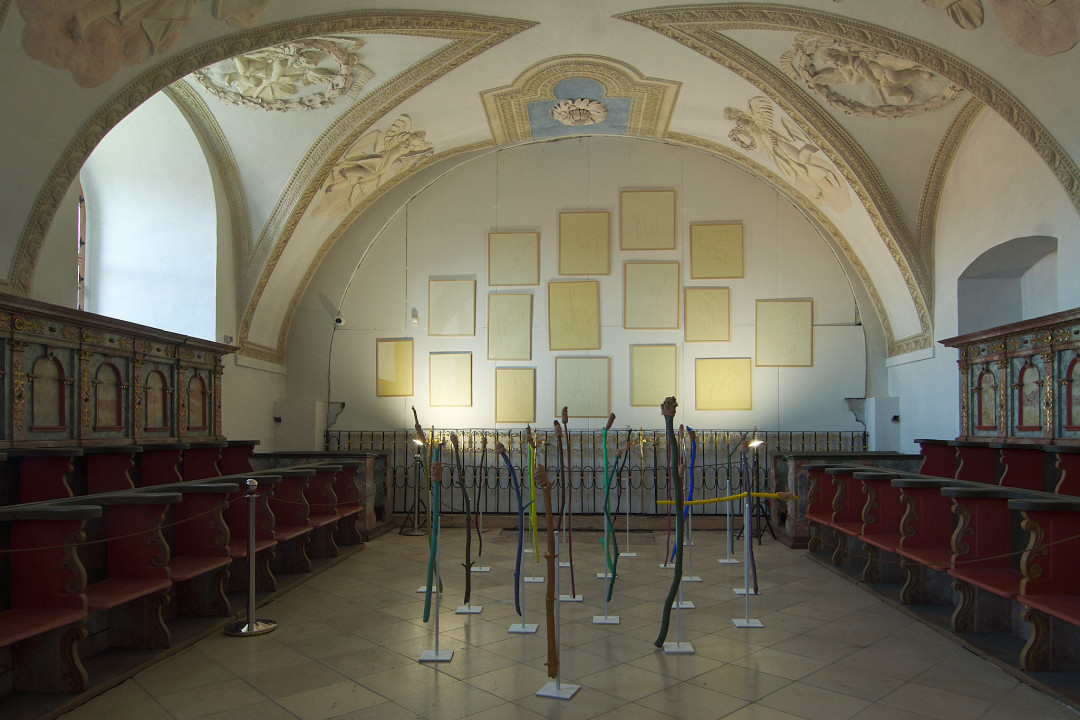
Venue: West Slovak Museum in Trnava
Opening: 25 February 2026, 6:00 PM
Exhibition period: 26 February – 30 April 2026
Cantalamissa is a research-based project conducted across the Italian Apennine mountain range. It speaks to and about communities, moving through territorial memories and sketching a geography of altitude. Rather than constructing a scientific database, the project gathers stories and builds a library of ancient knowledge.
Luana Perilli travelled through inland areas of several regions characterized by depopulation and a low presence of young people. Within these communities, she primarily engaged elderly residents in a series of video interviews in which they recalled childhood memories related to their relationships with animals and insects. These narratives reveal behaviours far removed from the political correctness and ecological education of recent decades, exposing the predatory nature of human beings.
Perilli’s research originated from a fascination with a butterfly, Pieris brassicae (the Large White), which was the target of more or less cruel childhood games throughout the Apennine Peninsula. For this reason, more than other creatures, it acquired numerous names in various Italian dialects, including cantalamissa, a term from the Calabrian dialect. This name was given to the artistic project, initiated in Calabria and gradually involving numerous communities across the Italian regions of Basilicata, Lazio, Abruzzo, Marche, Emilia-Romagna, and Piedmont, as well as several partner institutions. These include the Ethnobotanical Conservatory of Castelluccio Superiore and the Poverella Nature Reserve in Taverna, with the support of botanist Carmine Lupia. Further collaborators were the Harp association from Fontecchia led by Valeria Pica; Galleria 16 Civico in Pescara directed by Christian Ciampoli; ISIA in Faenza, with the support of Ivan Severi and director Maria Concetta Cossa; and the National Mountain Museum in Turin, with curator Andrea Lerda.
The interviews were recorded in a three-channel video installation that poetically interweaves memories, songs, and testimonies, forming a temporary, itinerant, narrative, non-homogeneous, and specific community dispersed across the Italian territory.
To counterbalance the “politically incorrect” games of childhood in the past, a series of “educational actions” was developed, aimed at highlighting both intra-species and inter-species agreements between individuals and nature—particularly between humans, forests, and mountains.
Students from academies, secondary schools, and local residents participated in practices of walking as an artistic form—an experience of immersion in nature and shared animality—seeking to overcome anthropocentric dynamics and to grasp the interconnectedness of animals, humans, and plants.
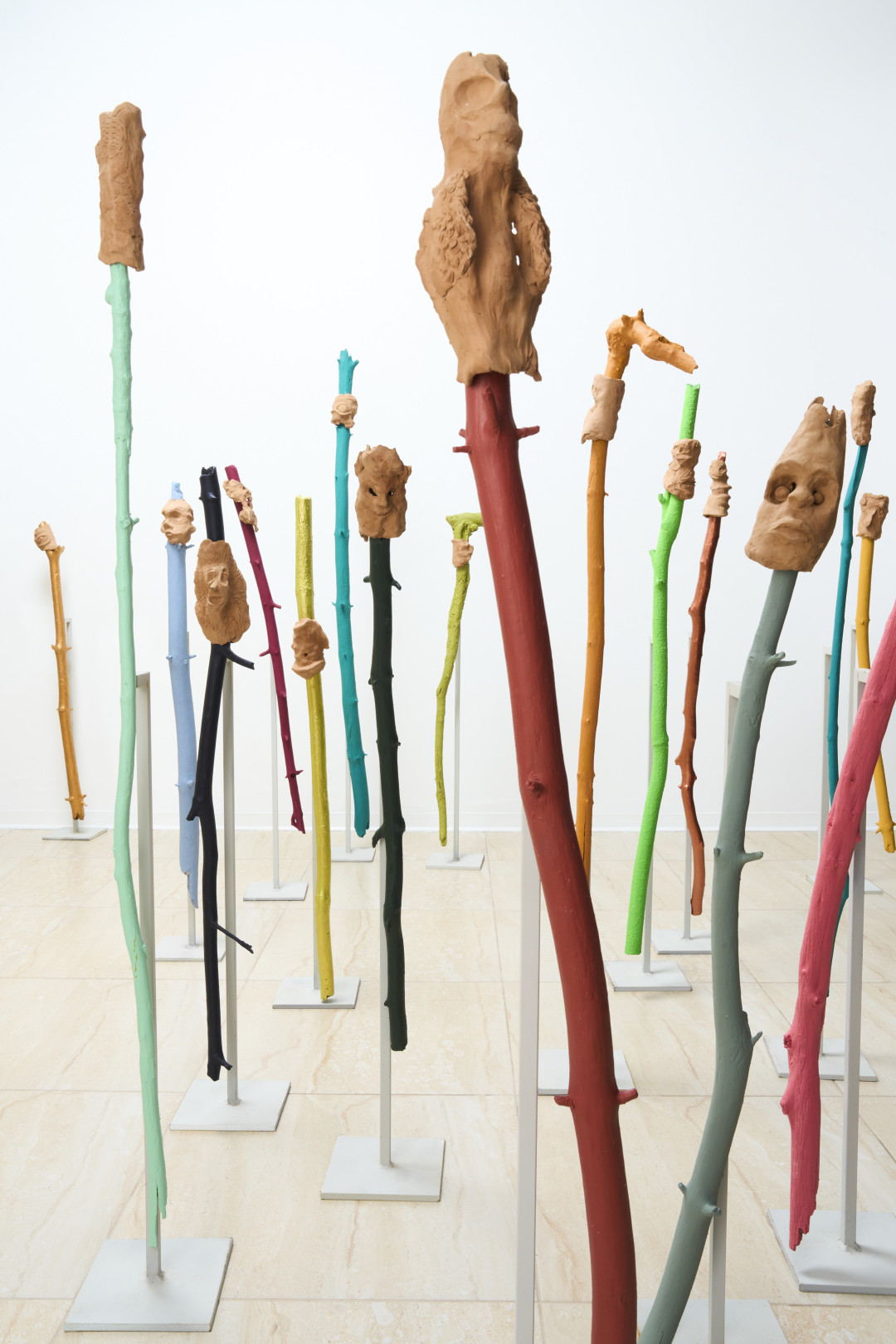
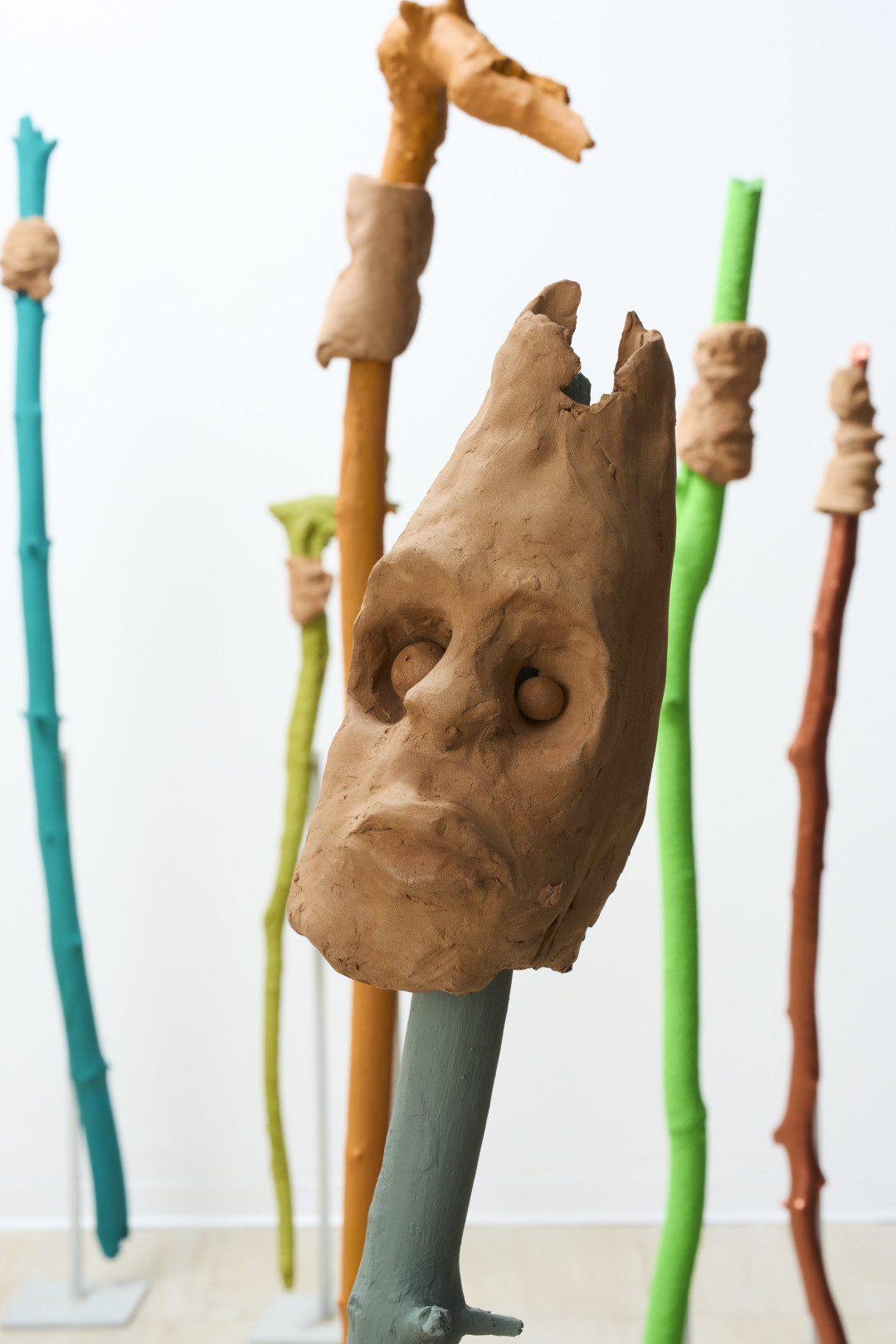
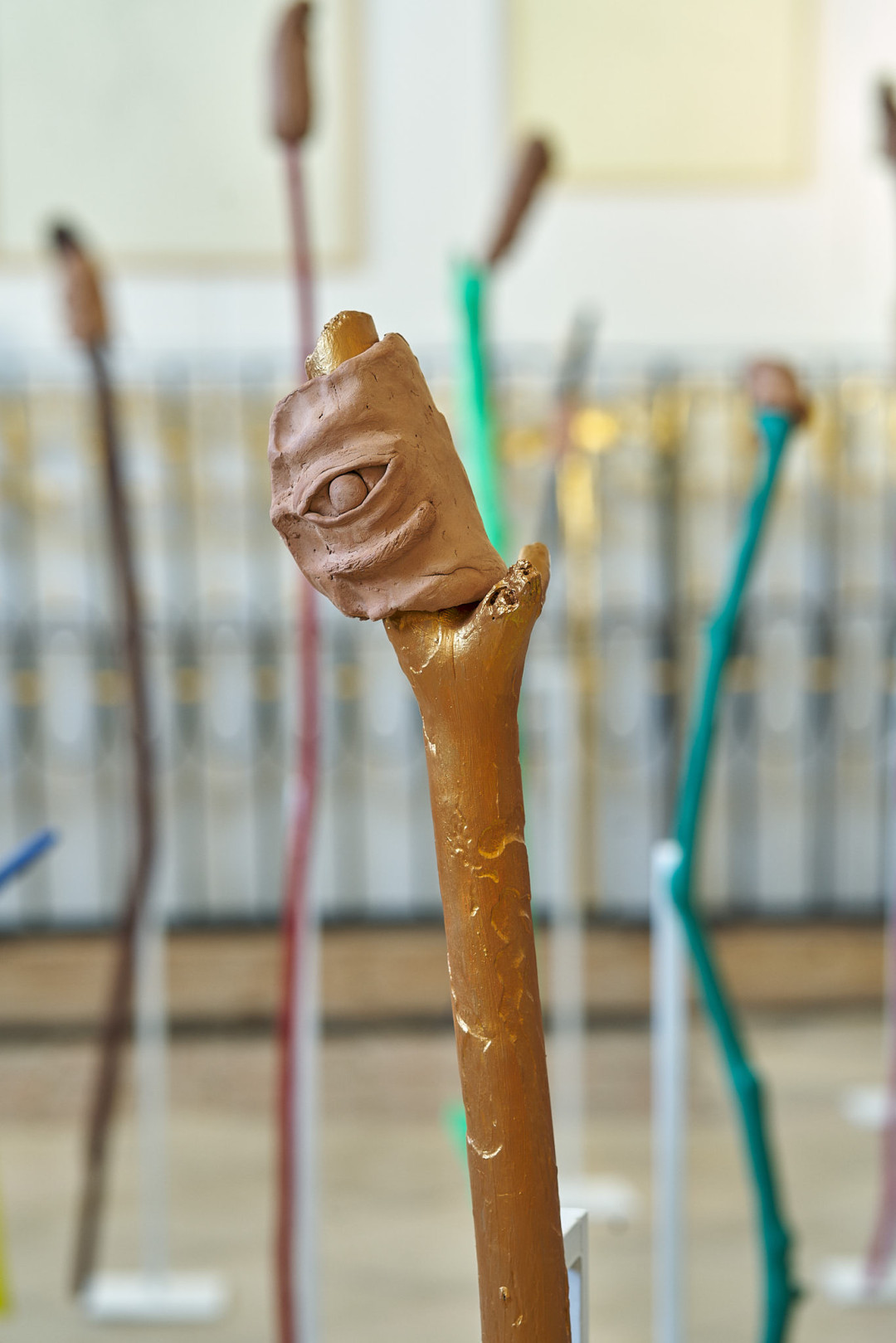
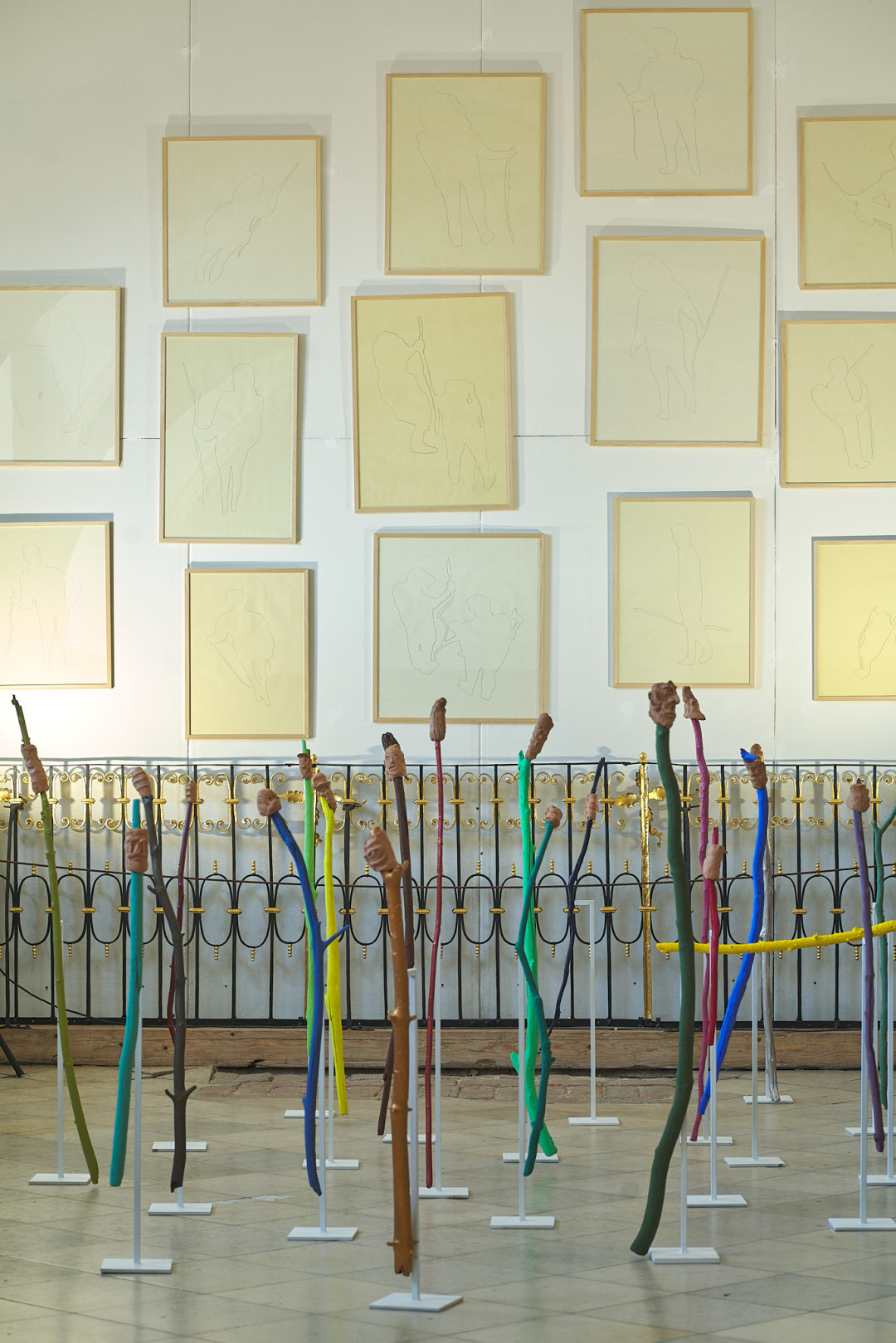
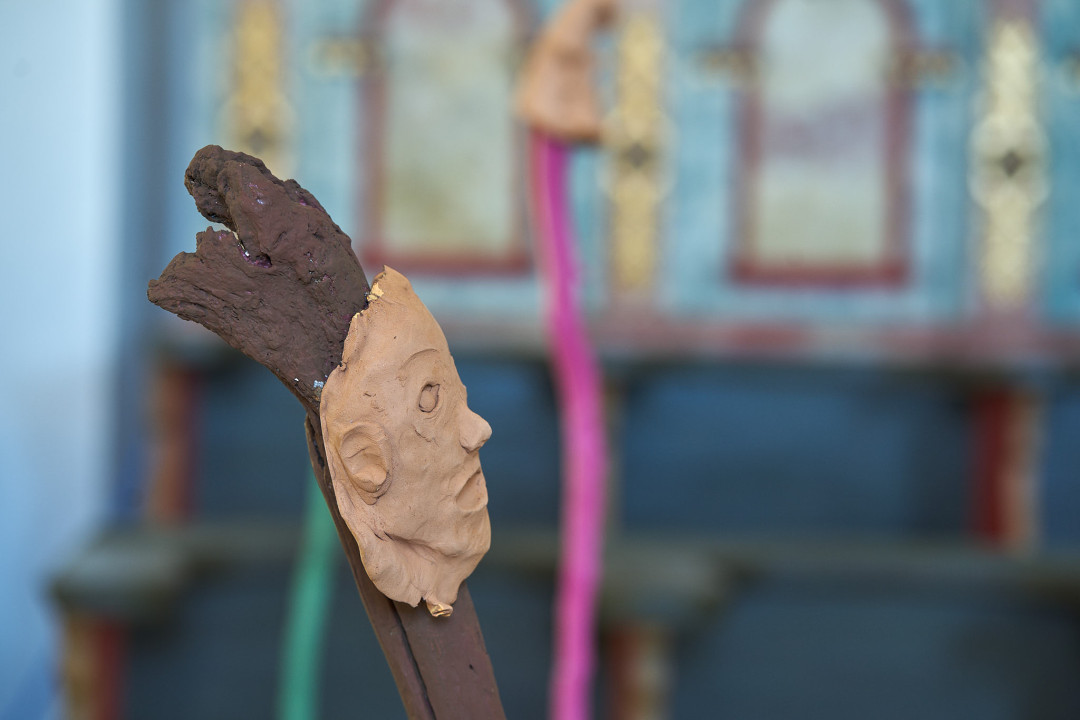
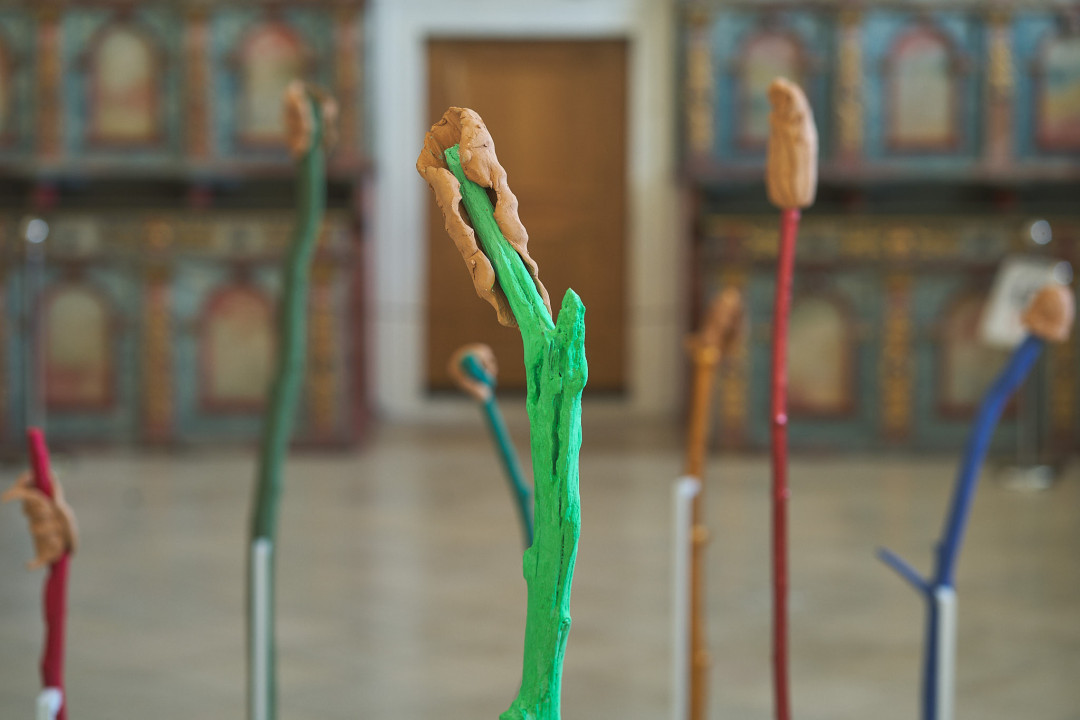
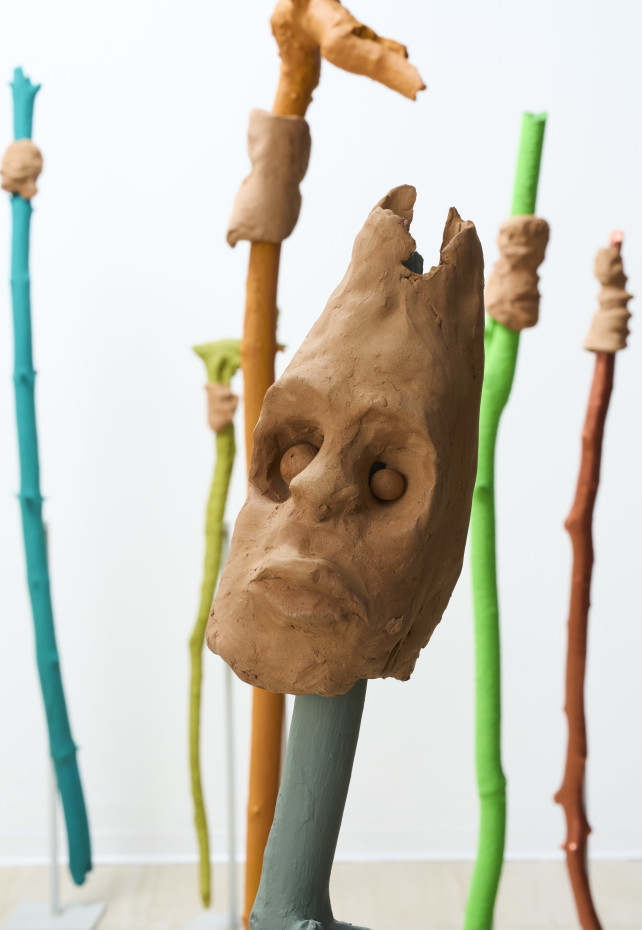
“In every forest we met with local communities, and from each forest we asked for a plant prosthesis. Through the use of walking sticks, we were thus able to approach multi-legged animals. At the end of the walks, each participant’s stick became the object of a collective sculptural process, in which the prosthesis of the individual body also turned into a trigger for animal imagination and shared pareidolia (a psychological phenomenon in which the brain interprets random or ambiguous stimuli as recognizable forms, most often faces or figures).”
The result is a portrait of a heterogeneous community that hybridizes human language with animal language, imagines faces in clay while searching for prey or predators in the forest, and calls upon the vegetal body of the forest for assistance, enabling the group to move through it as a pack.
(Luana Perilli in Cantalamissa, Il Rio, 2026)
The organization of the exhibition in Trnava was made possible through collaboration with the West Slovak Museum and the Ján Koniarek Gallery, with Lýdia Pribišová, Adrián Kobetič, and Andrej Sabov, under the auspices of the Italian Cultural Institute in Bratislava.
The Trnava project also involves students and faculty from the Department of Art Education at the Faculty of Education, Trnava University. In spring, together with the curator and the artist, they will take part in a walk in the Little Carpathians. Participants will find their own walking sticks and, during a workshop, create original clay handles from Modra clay to adorn them.
Luana Perilli is an artist who teaches at the Academy of Fine Arts in Rome and at St. John’s University, Rome Campus. Her work explores the relationship between nature and culture, operating between storytelling, science, and the experience of both natural and human collectives. Initially focused on collective memory as a fluid and interchangeable narrative, her research has gradually shifted toward models of natural aggregation in eusocial animal societies. She is the recipient of the Tomorrow’s UniCredit Award (2024) and has exhibited in museums and galleries including: Auditorium Spazio Arte, Rome; MACRO, Rome; Hit Gallery, Bratislava; Medium Gallery, Bratislava; Co.As.it/Museo Italiano, Melbourne; MIC, Faenza; PAV, Turin; Museum Biedermann, Donaueschingen; PAN, Naples; MSU, Zagreb; Palazzo della Permanente, Milan; MUSPAC, L’Aquila; Tese delle Vergini dell’Arsenale, Venice; Kochi-Muziris Biennale; MAMM Multimedia Art Museum, Moscow; Fotografie Forum, Frankfurt; Museo della Montagna, Turin; and Stadtgalerie, Kiel.
Cantalamissa is a project curated by Simona Caramia and produced by the Academy of Fine Arts in Catanzaro between 2024 and 2026 as part of the research activities of the PERFORMING project. The project is funded by the PNRR under Mission 4 “Education and Research” – Component 1 “Strengthening the provision of educational services: from early childhood education to universities – from research to enterprise” – Investment 3.4 “University teaching and advanced skills,” T5 “Strategic partnerships / initiatives to innovate the international dimension of the AFAM system,” funded by the European Union – NextGenerationEU.