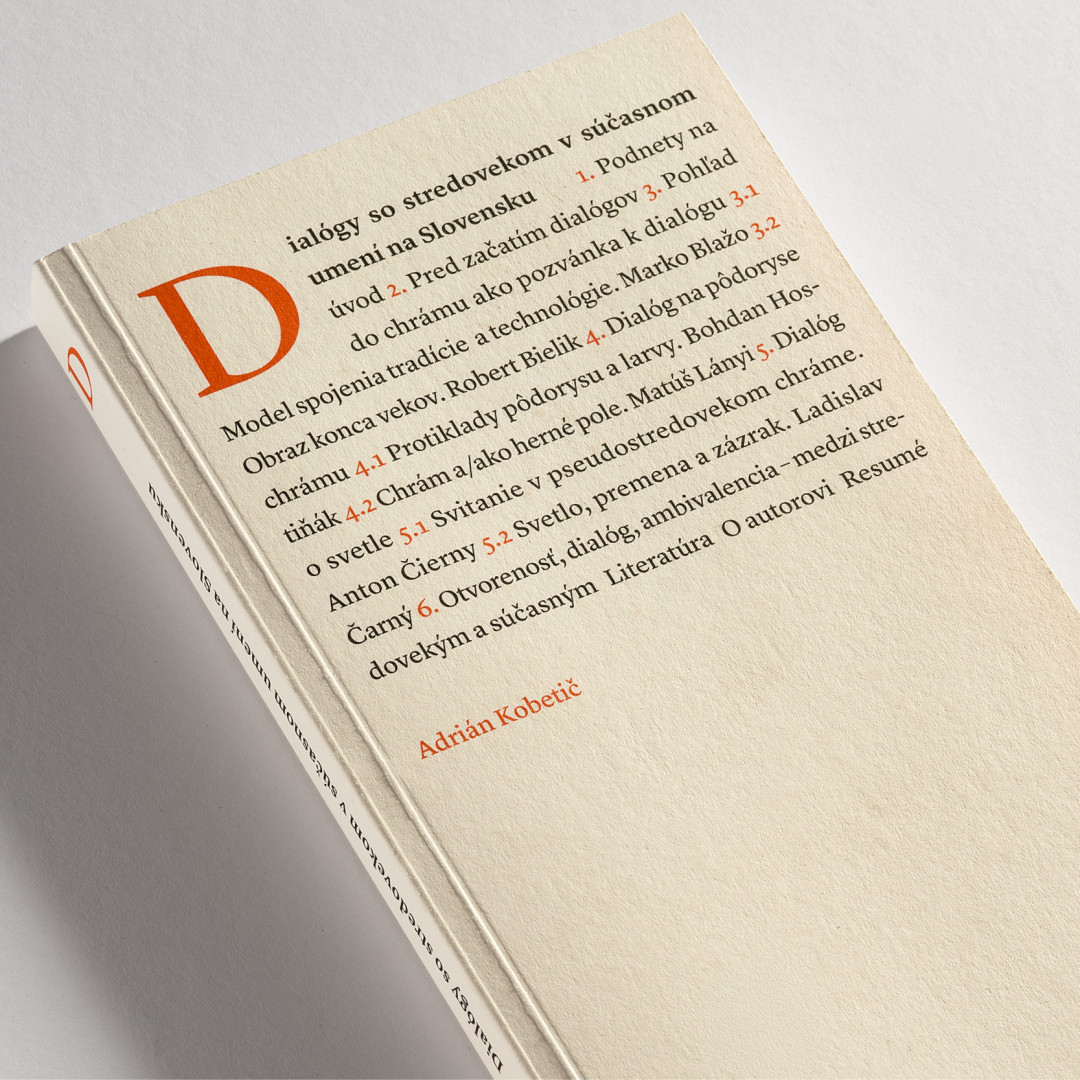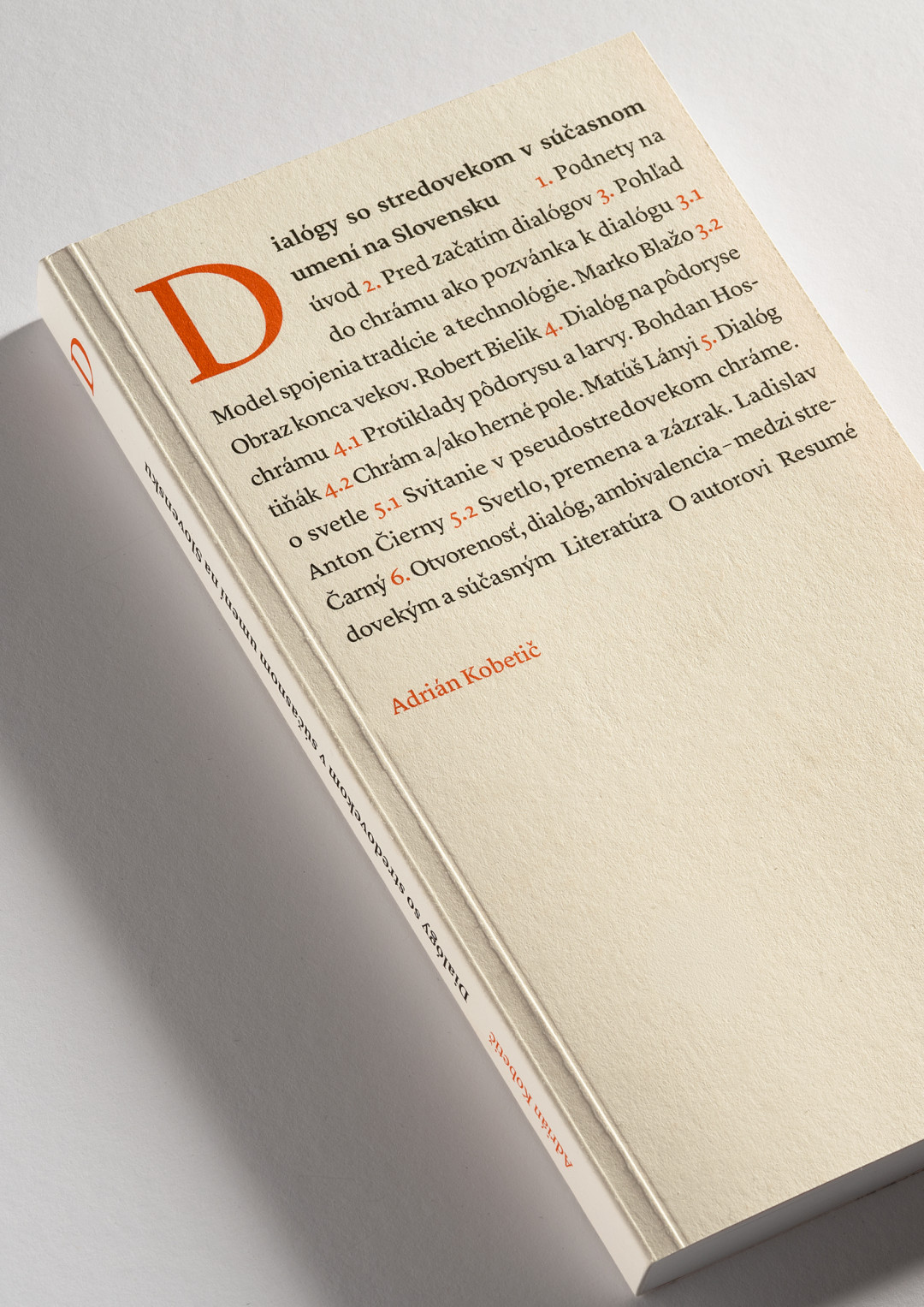
The presented work explores dialogues between selected works of contemporary art in Slovakia and medieval visual culture. In the introductory chapter, it first presents two impulses for this line of thinking: the south transept window of Cologne Cathedral, realized according to a design by Gerhard Richter, and the installation Mirroring by Juraj Gábor in the ruins of a medieval church in Haluzice. The following chapter outlines certain motivations as well as publications that inspired the creation of the work. It introduces the key concepts appearing throughout the book, as well as the methodological framework on which the study is based. These include primarily the iconological method as formulated by Erwin Panofsky, and the semiotic method of interpretation grounded mainly in the thinking of Charles Sanders Peirce. In many respects, the work also builds on the thought of Umberto Eco, whose texts it frequently cites.
The subsequent chapters develop the interpretative analyses themselves, focusing on individual dialogues between contemporary art and medieval visual culture. Each of the six presented interpretations addresses a different media situation and engages a different artist who, in a specific way, enters into a dialogue with the Middle Ages. The first two examine two versions of the view into a sacred space—Marko Blažo and Robert Bielik. Blažo explores the possibilities of combining digital technology with painterly tradition, while Bielik engages with a veristic vision of the end of time based on the prophecy of Isaiah.
The next chapter focuses on the use of the medieval church floor plan in the work of two artists—Bohdan Hostiňák and Matúš Lányi. Hostiňák creates a tension of opposites by inserting a larva into the church floor plan, while Lányi compares the church plan to a game board. The final two interpretations address the question of light within the church in the work of Anton Čierny and Ladislav Čarný. Čierny thematizes the sunrise within the sacred space, while Čarný reflects on the doctrine of transubstantiation.
The concluding chapter then highlights three unifying concepts across all the presented works: openness, dialogue, and ambivalence.